
Someone whispers a question in your ear. You say a name out loud. The named person has one choice: flip a coin. Heads — the question gets read aloud to everyone. Tails — they never find out what was just said about them.
That's it. That's the game.
And yet a room of adults who've played it once will tell you it's one of the more psychologically interesting party games they've encountered. Because the part that creates all the tension isn't the answers. It's the secret — the whispered question nobody else heard, the coin that decides whether it surfaces, the person sitting across the table watching everyone react while knowing absolutely nothing about what was just said.
The paranoia is the game. The questions are just the fuel.
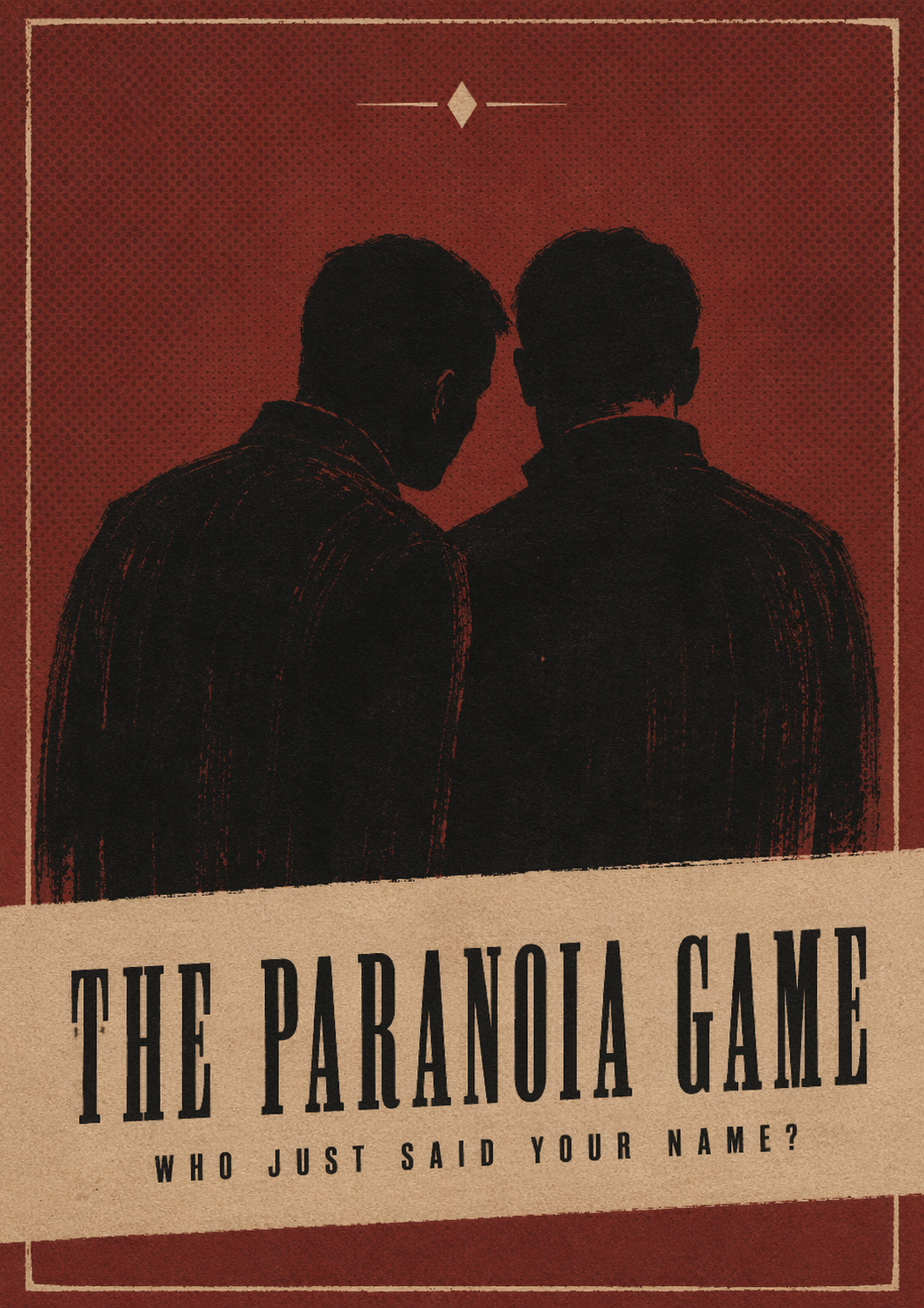
How to Play: The Core Rules
The rules are simple enough to explain in ninety seconds. What happens after round one is harder to predict.
Setup:
- 4–12 players sitting in a circle (smaller groups can work but the social texture gets thin)
- A coin — any coin
- No other equipment needed
Each round goes like this:
-
Player A whispers a question to Player B. The question must have a person in the group as the answer. Example: "Who in this room has the most secrets?"
-
Player B says the answer out loud — a name, nothing else. They do not repeat the question.
-
The named person (Player C) now has a choice: flip the coin.
- Heads: Player A reads the question aloud. Everyone hears it.
- Tails: The question stays buried. Player C never learns what was just said about them.
-
Play passes to the next person clockwise. Player B now whispers a question to Player C, and so on.
The optional drinking version adds a drink for tails and a sip for heads. The game works just as well without it.
Why the tails option matters more than it seems: Most people, the first time they flip tails, feel a specific kind of unease settle in. They know someone just said something about them. They don't know what. They have to sit with that for the rest of the night. The game's name isn't ironic — the mechanic is engineered to produce exactly that feeling, mild and social as it is.
The Psychology of the Buried Question
There's a specific kind of cognitive discomfort that belongs to partial information. Research on epistemic curiosity — the drive to close information gaps — shows that the brain treats an unanswered question it knows exists differently from one it never encountered. You can't process it, put it away, or dismiss it. It stays active.
That's why tails is often more interesting than heads. A revealed question has an answer you can absorb and move past. A buried question stays alive for the rest of the evening. You find yourself watching the person who whispered, looking for clues, running through possibilities. Was it something good? Was it something they'd never say to your face?
This is, of course, exactly how social groups function all the time. People hold private assessments of each other that rarely get spoken. Paranoia makes the existence of those private assessments audible — just this once, just about you — while keeping the content concealed by default. It's a formalized, voluntary version of something that happens constantly anyway.
How One Round Works
Tier 1: The Opener Set
These work for any group — friends who've known each other for years, coworkers at a holiday party, or people who've just met. They produce genuine answers without requiring established trust, and they're specific enough that the room reacts.
- Who in this room would win a game show they had absolutely no business being on?
- Who here could convincingly sell something to anyone?
- Who looks the calmest but is probably thinking the most right now?
- Who in this group has the most interesting story they've never told?
- Who would be the hardest to anger — and the scariest when it finally happened?
- Who here gives the best advice? And who gives the most confidently wrong advice?
- Who in this room would last longest if everyone had to live off-grid for a month?
- Who's the person in this group that people consistently underestimate?
- Who here has the most going on beneath the surface?
- Who would you trust most to keep a secret that wasn't theirs to keep?
- Who in this room would be the first to become famous — and what for?
- Who here is the funniest when they're not even trying to be?
- If this group needed someone to negotiate their way out of an awkward situation, who would you pick?
- Who do you think works the hardest when nobody's watching?
- Who in this room do you think has changed the most in the last few years?
- Who here would you call first if you were having a genuinely terrible day?
- Who's the person in this group that everyone has a slightly different experience of?
- Who would be the most dangerous to be on the opposing team against?
- Who here do you think knows something about you that they've never mentioned?
- If you had to describe this group to a complete stranger, who would you describe last — and why?
- Who in this room do you think would thrive most in an entirely different life?
- Who here do you think has the highest tolerance for risk?
- Who would you want in your corner during a crisis, no questions asked?
- Who's the most likely to be doing something interesting when nobody else is watching?
- Who here do you think is carrying something they don't talk about?
→ Try RandomQ Classic mode — 3,000+ questions, no login required
Tier 2: Once the Group Has Found Its Rhythm
These go a step further. Still social, not yet personal — but specific enough that the answers sometimes land somewhere surprising. Use these after the opener set has established what kind of night this is.
- Who in this room has the most complicated relationship with at least one other person here?
- Who here is most likely to have a secret skill nobody knows about?
- Who do you think is the most different in private than they appear in public?
- Who in this group do you think has been the most unfairly judged by someone at some point?
- Who would you least want to be in an actual argument with?
- Who here do you think has the most unfinished business — with a person, a place, or a version of themselves?
- Who would be most likely to disappear without warning and move somewhere completely different?
- Who in this room genuinely doesn't care what other people think — and who says they don't but actually does?
- Who here has the best poker face?
- Who do you think has been through the most and shown the least of it?
- Who in this room is most likely to be doing exactly this in fifteen years?
- Who here has the most strongly held opinion they'd be embarrassed to say out loud right now?
- Who do you trust most to make an important decision on your behalf?
- Who in this group do you think carries the most guilt about something?
- Who here is most likely to be right about something the rest of the group is wrong about?
- Who do you think will end up surprising everyone with what they do with their life?
- Who in this room would you go to for advice about a relationship problem?
- Who here is the most quietly competitive?
- Who do you think has the most unusual theory about something they'd never admit to?
- Who in this group do you think knows you better than you know yourself?
- Who here would you trust to be honest with you even when it was uncomfortable?
- Who in this room do you think would be a completely different person in a different context?
- Who has the biggest gap between how they present themselves and who they actually are?
- Who here do you think is most underestimated professionally?
- Who would be most likely to write a memoir worth reading?
Tier 3: The Spicy Set
These belong at hour two or three, with a group that has already been honest in rounds one and two. They're not cruel — they're specific. And specificity can land in complex ways depending on the trust level and what's actually going on between people in the room.
Don't introduce these early. The lighter questions build toward them.
- Who in this room do you think is going through something they haven't told anyone?
- Who here do you think is the least satisfied with where their life is right now?
- Who has the most unresolved tension with someone else in this circle?
- Who in this group has changed in a way you're not sure you understand yet?
- Who here do you think has feelings for someone in this room they've never said out loud?
- Who do you trust least to tell the full truth when the truth is inconvenient?
- Who in this room do you think is the loneliest?
- Who here has the biggest gap between who they are at work and who they are right now?
- Who do you think has regrets about a decision they made in the last two years that they haven't talked about?
- Who in this group are you most afraid of losing touch with?
A note on tier 3: The point isn't exposure. The point is that someone said something true, and hearing your name attached to it — whether the question gets revealed or not — stays with you. That's the game at its most honest, and also its most delicate.
Paranoia Variants
The core rules are flexible. These variations adjust the stakes, pacing, or social texture enough that the game feels different even to people who've played before.
Paranoia Lite — always reveal Whispers happen, names are called, and the question is always read aloud immediately. No coin flip. This removes the core paranoia mechanic but changes the social dynamic in a different way — instead of living with uncertainty, everyone hears everything in real time. It plays faster and works well for groups that want the honesty without the sustained tension.
Double or Nothing After a tails flip, the named person can push: say "double or nothing" and flip again. Heads on the second flip means both this question and the next one get revealed. Tails means both are permanently buried. This rewards risk tolerance and creates a specific gambler's dilemma in the middle of a party game.
Anonymous Paranoia (over text) One player sends a DM with a question to someone else. The recipient answers in the group chat with a name only. The named person can ask to know the question, but the asker's identity stays private unless they choose to reveal it. The secondary paranoia — not knowing who whispered — adds a layer the live version can't produce.
Team Paranoia Split into two teams. Each team whispers questions about the other team's members. This version works better for groups that don't know each other well, because it builds cross-group tension rather than surfacing dynamics that already exist within a close friend group.
For Different Groups
How Paranoia Compares to Similar Games
| Feature | Paranoia | Most Likely To | Never Have I Ever |
|---|---|---|---|
| Public vs. private | Whispered (private) | Voted publicly | Public statements |
| The core tension | Not knowing the question | Being voted on | Past actions revealed |
| Group size | 4–12 | 4–15+ | 3–20+ |
| What the mechanic tests | Tolerance for uncertainty | Social self-awareness | Candor about experience |
| Reveal mechanic | Coin flip (50/50) | Automatic | None |
| Depth potential | High (tier 3) | Medium | Medium |
| Risk of awkwardness | High if not paced | Medium | Low to medium |
| Best for | Established friend groups, late night | Parties, mixed groups | Larger groups, lighter mood |
The key distinction that separates Paranoia from all of them: in most party games, everyone knows the question. In Paranoia, half the experience is specifically about not knowing.
How to Run It Without Ruining the Night
Explain the mechanic before round one. Not the full theory — just: the question stays secret unless the named person flips heads. If someone doesn't understand why their name was called and that there's an attached question they may never learn, the mechanic produces confusion rather than tension. Two minutes of explanation prevents ten rounds of "wait, what just happened?"
Start with tier one. Always. Every group, every session. Even close friends who've played before need a calibration round. The opener questions aren't just warm-up filler — they establish the room's tolerance for honest assessment before anything more loaded gets introduced. Skip them and the tier 3 questions land harder than anyone wanted.
Watch for the same person being named repeatedly. If one person is the answer to four or five consecutive questions, something the game has surfaced rather than created is happening in the room. That's either a signal to pull back from deeper questions, or a sign that there's something this group has been circling. Either way, pay attention.
Don't let reveals turn into group therapy. When a question gets read aloud and the room wants to riff on it, give that exactly one beat. If it turns into a prolonged discussion about the named person, the game has stopped. The fun of Paranoia is the next whisper, not the aftermath of the last one.
The person who consistently flips tails isn't avoiding the game. They're playing a version of it where the paranoia accumulates quietly rather than gets resolved. That's valid — and sometimes produces more interesting conversations afterward than the revealed questions ever do. Don't push anyone toward heads.
Know when the game has done its work. The best Paranoia sessions end when the conversation has taken on a life of its own — when people have stopped waiting for questions and started talking for real. That's the success condition. It means the game worked.
FAQ
What is the actual origin of the Paranoia game?
There's no clean attribution. It's the kind of format that emerged across college campuses and friend groups and got passed along with rules that shifted slightly each time. Most people who play it learned it from someone who learned it from someone else. The coin flip mechanic is consistent enough across versions that it's either original or so obvious that everyone independently arrived at it. Either way, it works.
Can Paranoia be played with just two people?
Technically yes, but the whisper mechanic loses its purpose — with only two players, the answer is obviously the only other person present, and there's no social audience for the reveal. What works between two people is the spirit of it: asking questions about the other person that they don't immediately get to hear. The game becomes something closer to a mutual assessment exercise than a party format.
What if the named person doesn't want to flip?
They can pass, no explanation required. The game should have an explicit opt-out for the coin flip — flipping is a choice, not an obligation. Pressuring someone to flip when they've declined will end the night faster than anything in the question list. Most people will flip because curiosity is usually stronger than the desire to stay comfortable, but "I'd rather not know" is a complete answer.
A question got revealed and someone clearly didn't enjoy it. What now?
Move on quickly and without lingering on it. Acknowledge it briefly — something like "yeah, that one landed" — and go directly to the next round. The worst response is collective guilt, extended analysis, or someone over-explaining why they asked it. The game produces honest moments that sometimes hit harder than intended. How the group handles those moments is what people will actually remember.
Is Paranoia appropriate for teenagers?
With supervision and limited to the tier 1 questions, yes. The coin flip mechanic is fine for teenagers — the tension it creates is social and low-stakes. What to monitor with younger groups is the tendency to target one person repeatedly with the whisper format. If the same person keeps getting named and the questions are clearly pointed rather than genuinely curious, that's no longer the game — and someone usually knows it.
Does the game require alcohol?
No. The drinking version exists and is common, but Paranoia works entirely without it. The coin flip is tension enough on its own. Some people find the game more interesting without alcohol because the reactions are unfiltered and the moments where someone sits with an unanswered question are more vivid when everyone's fully present.
What's the ideal group size?
Four to twelve players is the range where the game runs best. Below four, the pool of possible answers for any question is too small and the game loses its social texture. Above twelve, the rounds feel too distant — by the time play returns to you, you've lost the thread of what was whispered two minutes ago. Eight is probably the sweet spot: enough people that any name called is a genuine reveal, small enough that everyone stays engaged.
Explore More
- Truth or dare questions →
- Most likely to questions →
- Never have I ever questions →
- Would you rather questions →
- Play RandomQ — 7,700+ questions across six modes →
The game works because it gives structure to something that already happens: the private assessments people make of each other all the time, which almost never get said. Paranoia makes those assessments audible — sometimes — while keeping the content hidden by default.
The coin is just a decision mechanism. What it's actually deciding is whether something true gets spoken out loud, or stays in the room, somewhere between the person who whispered it and the person who heard their own name and still doesn't know why.
→ RandomQ has 7,700+ questions across six modes — free, no login, no setup