
You're at a team meeting, someone announces the game, and suddenly twenty adults are staring at the ceiling trying to excavate something memorable from the last three decades of their lives. Ten seconds pass. Someone says "I have two truths and a lie." Three statements come out. Two are boring and one is so weird that everyone guesses it immediately. The session gets awkward and moves on.
The problem wasn't effort. It was calibration.
A usable two truths and a lie set isn't a list of three random facts about yourself — it's three statements that sit in the same plausibility zone, where the lie is ambiguous enough that people genuinely can't be certain until you tell them. Most individual examples you find online won't help much because they're untethered from context: a statement that works brilliantly at a close-friends gathering is obviously the lie in a job interview team-building session.
The sets below are organized by situation. Each one has the lie marked — not to spoil the game, but so you can understand the calibration and adapt the set to your own life.
→ Try RandomQ — icebreaker questions across nine categories, free, no login
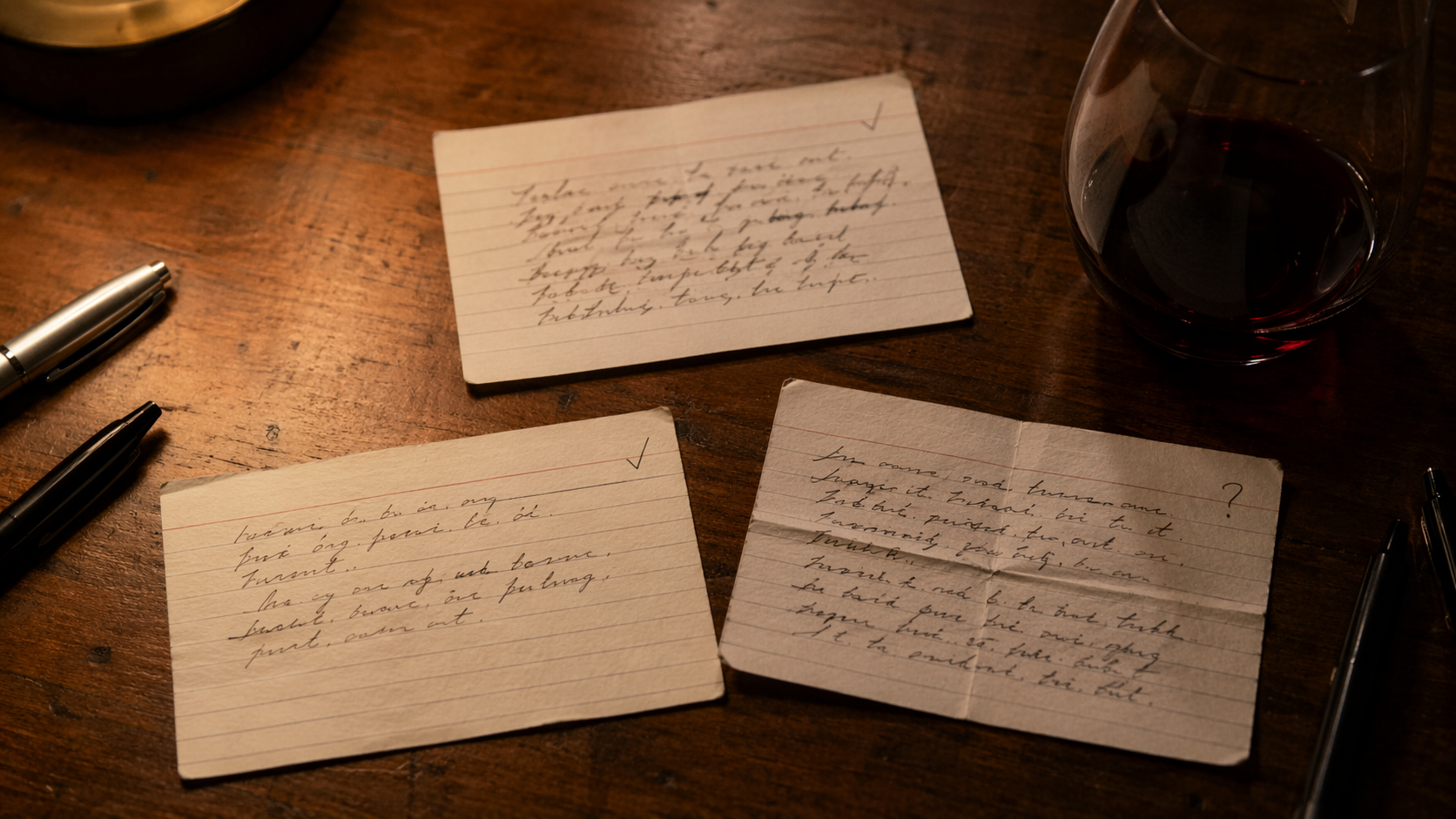
Why Sets Work Better Than Individual Examples
Most two truths and a lie resources give you lists of individual statements and tell you to pick three. The result is usually mismatched: one statement is wildly unusual, one is totally unremarkable, and one is genuinely ambiguous — and the group spots the lie in under five seconds by finding the outlier.
A balanced set is different. All three statements are in the same register: equally interesting, equally plausible, equally specific. The lie doesn't stand out because it isn't the strangest or the most boring — it fits.
Strategy details, including how to build your own set from scratch, are covered in our complete guide to Two Truths and a Lie →
What Research Says About How We Actually Lie — and Why It Matters Here
Bella DePaulo's landmark 1996 study "Lying in Everyday Social Interactions" published in the Journal of Personality and Social Psychology found that people tell on average one to two lies per day — and that most of those lies are small, social, and utterly undetectable. The lies that get caught tend to have two things in common: they're vague where real memories are specific, and they over-explain in ways that authentic recollection doesn't.
Paul Ekman's decades of research on micro-expressions and deception detection showed something related: even trained professionals rarely exceed 60% accuracy when identifying lies in controlled settings. Untrained groups do about as well as chance. What this means for the game is that a well-constructed lie is genuinely hard to spot — and the reason most people get caught isn't because they lied, it's because the lie was in a different register than the truths beside it.
What makes a great set isn't clever deception. It's consistent calibration. The three statements below are organized to give you that consistency, grouped by the situation you're actually in.
Funny Sets: When the Goal Is to Get a Laugh
These work when the group wants to be entertained more than genuinely fooled. The truths are amusing on their own; the lie extends that energy rather than disrupting it.
Set 1
- I once sent a "thinking of you" text to my landlord instead of the person it was meant for. They replied warmly.
- I have a ranked spreadsheet of every fast food breakfast item I've tried. I update it quarterly.
- I cried watching an insurance commercial. Full tears. (lie)
Set 2
- I once waved enthusiastically at someone for thirty seconds before realizing they were waving at the person behind me.
- I have a deeply held, defensible opinion about the correct way to load a dishwasher that I've never stated at full volume. (lie)
- I've eaten cereal for dinner so regularly that I have a preferred bowl-to-milk ratio written down.
Set 3
- I've accidentally joined the wrong meeting on a video call and didn't realize for four minutes.
- I once apologized out loud to a chair I walked into, in public.
- I have a list of restaurants I want to visit in cities I have no plans to travel to. The list is forty-three entries long. (lie)
Set 4
- I've been told "I love your work" by someone who had clearly confused me with someone else, and I thanked them genuinely.
- I once had a full, substantive argument with someone over the correct pronunciation of GIF. I have not moved on. (lie)
- I once checked my phone for the time and immediately forgot what time it said. I did this three times in a row.
Set 5
- I've practiced a phone call in my head so many times that I could no longer tell whether I'd actually made it.
- I once spent an hour looking for my glasses while wearing them. (lie)
- I have a note saved in my phone that just says "the bag" with no other context, from 2021. I don't know what it means.
Set 6
- I've spelled my own name wrong in an email signature and let it go for three weeks before anyone noticed.
- I once thanked a self-checkout machine out loud. Twice, in the same transaction.
- I have genuinely strong opinions about the correct direction of a ceiling fan based on season. (lie)
Work and Team Building Sets: Professional but Personal
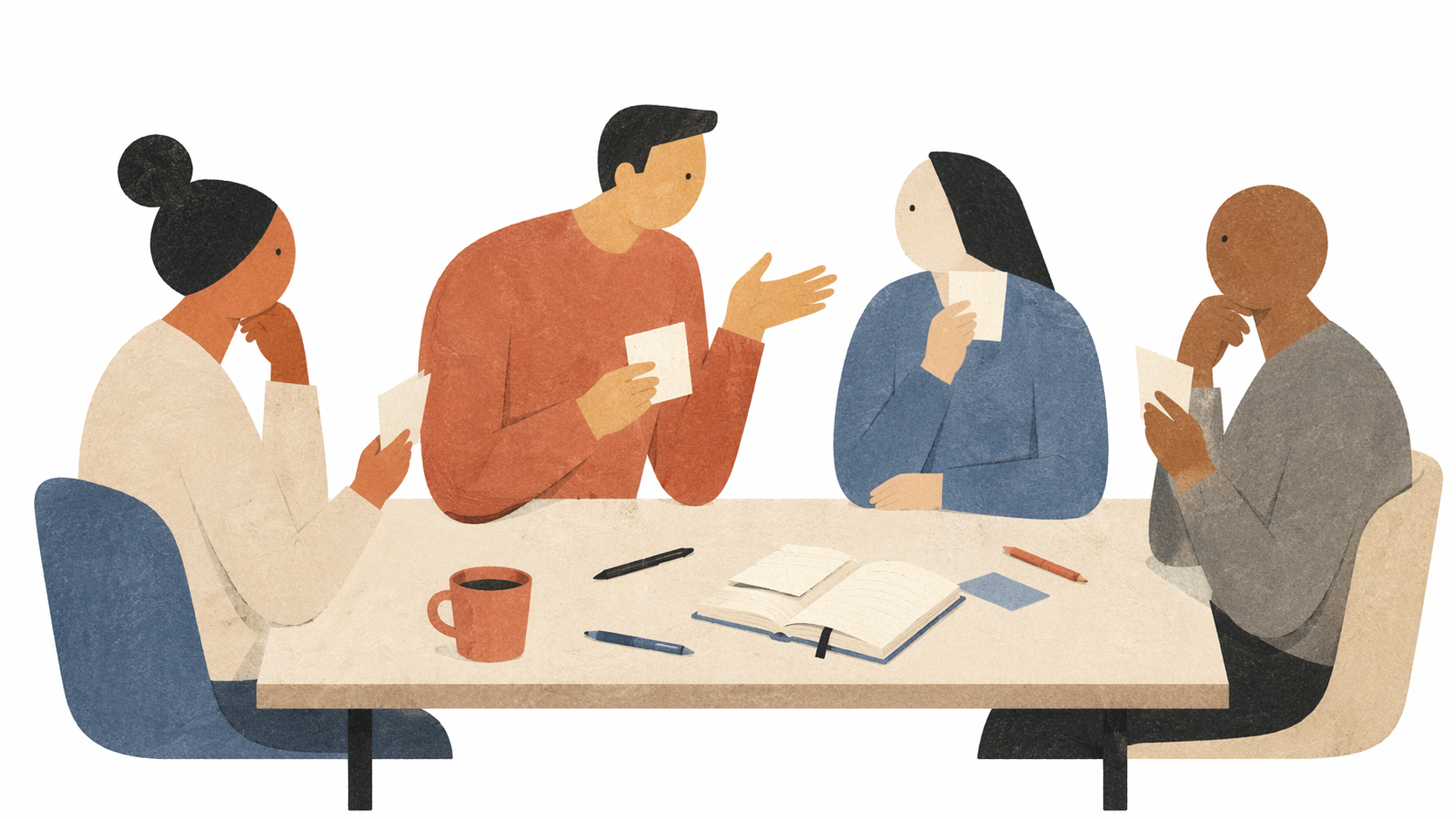
These reveal something real without crossing into territory that makes anyone uncomfortable. The goal is to break the ice without anyone needing to disclose anything sensitive.
Set 7
- I've left a job after less than a week. The decision was correct.
- I once presented to an audience three times larger than I'd been told to expect. I found out when I walked onstage.
- I have sent an email to the wrong person and spent the next hour writing a follow-up to explain it. (lie)
Set 8
- I've been in a job where part of my role required me to legally use a different name. I cannot explain this further.
- I once gave feedback on a piece of work and later realized, with certainty, that I had read the wrong document. (lie)
- I've been asked to manage someone significantly more experienced than me in my first month at a job.
Set 9
- I've worked in three completely different industries and the skill that transferred most is something I never put on a résumé.
- I once missed a meeting I had organized because I forgot to add it to my own calendar.
- I wrote something that was quoted in a publication I was not credited in. I found out years later. (lie)
Set 10
- I've had a mentor who I still consult on major decisions, despite us meeting exactly once in person.
- I once negotiated a salary by saying a number I had not planned to say and then had to commit to it.
- I've been on a hiring panel where two of us were evaluating the same candidate for the same role without knowing it. (lie)
Set 11
- I've worked at the same company as a family member and we deliberately never told anyone we were related.
- I gave a presentation using a slide deck I'd assembled from someone else's files without reading the notes. One note said something I should have removed.
- I've been promoted twice at the same company without ever expressing interest in either role. (lie)
Set 12
- I've run a meeting for 45 minutes on a topic I realized halfway through I had misunderstood.
- I once accidentally called a senior colleague by the name of their predecessor — the predecessor who had been fired. (lie)
- I have a strong preference about where I sit in meetings that I've never explained to anyone but that affects most of my decisions about arriving early.
First Date Sets: Personal Without Being Heavy
These are calibrated for the specific awkwardness of a first date: you want to be interesting, not overexposed. The truths should invite follow-up questions. The lie should be almost as plausible as the truths.
Set 13
- I've been to twenty-two countries but have never taken a beach vacation.
- I once ordered the same dish at a restaurant twelve times in a row to decide definitively whether I liked it. I did.
- I've learned to cook one cuisine extremely well and everything else I make is objectively average. (lie)
Set 14
- I've been on a trip where I missed my return flight and ended up staying an extra four days. I don't regret it.
- I keep a list of books I want to read and a separate list of books I've started and pretended I'd finished.
- I once had a genuinely great conversation with a stranger on a train and gave them a fake name I'd been using for the whole journey. (lie)
Set 15
- I have a strong opinion about morning routines that I've tested and refined over two years. It involves nothing a lifestyle article would recommend.
- I learned to drive at 24. This was not a big deal in the city I grew up in. (lie)
- I've ended a friendship because of a recurring thing they did that I never mentioned to them. I still think this was reasonable.
Set 16
- I've recommended the same book to six different people in the same year and been surprised every time by how polarizing it was.
- I once showed up to a formal event in completely wrong attire because I misread the invitation, and stayed anyway.
- I have a running note on my phone that is essentially a record of every particularly good meal I've had in the past three years. (lie)
Set 17
- I've lived in four different cities and moved to at least two of them for reasons that no longer make sense to me in retrospect.
- I failed my driving test twice. The second time was clearly the instructor's fault. (lie)
- I'm close friends with someone I met during a travel delay. We've stayed close for nine years.
Teen and High School Sets: What Actually Works for This Age Group
The challenge with teen groups is matching the plausibility zone for their actual experience — not too adult, not too juvenile. These avoid anything requiring life experience that most teenagers don't have yet.
Set 18
- I studied for an entire exam that turned out to be the day before. I somehow still passed.
- I convinced a substitute teacher that my name was different from the roster because I hated how they kept mispronouncing it. (lie)
- I've read a book for fun that later showed up on a required reading list, which somehow made me like it less.
Set 19
- I've been in a talent show twice. Neither time involved a skill I would currently admit to having.
- I once got a perfect score on a quiz for a chapter I didn't read, and a failing grade on one I studied for three days.
- I have a genuine strong opinion about which school lunch is the actual best that I've maintained consistently for years. (lie)
Set 20
- I've had a class where the teacher and I had the exact same first name, which was strange for everyone.
- I once presented a project I finished on the bus ride to school. I got a B+.
- I have memorized the entire schedule of every teacher I've had this year, including which period they're least likely to check homework. (lie)
Set 21
- I've pretended to have seen a movie that all my friends had seen, and maintained the pretense through two full conversations about it.
- I've accidentally called a teacher "mom" — not in elementary school, but in a grade that would have been embarrassing.
- I've gotten lost in a building I had been going to school in for two years. (lie)
Set 22
- I once stayed up the entire night before a test, slept through my alarm, and then took the test on adrenaline. The result was not proportional to the effort.
- I've been in a group project where I genuinely did not know one of my group members' names until the day we presented.
- I have a system for choosing which seat to sit in for every class that I've never explained to anyone and that I take seriously. (lie)
Couples Sets: For When You Think You Know Everything About Each Other
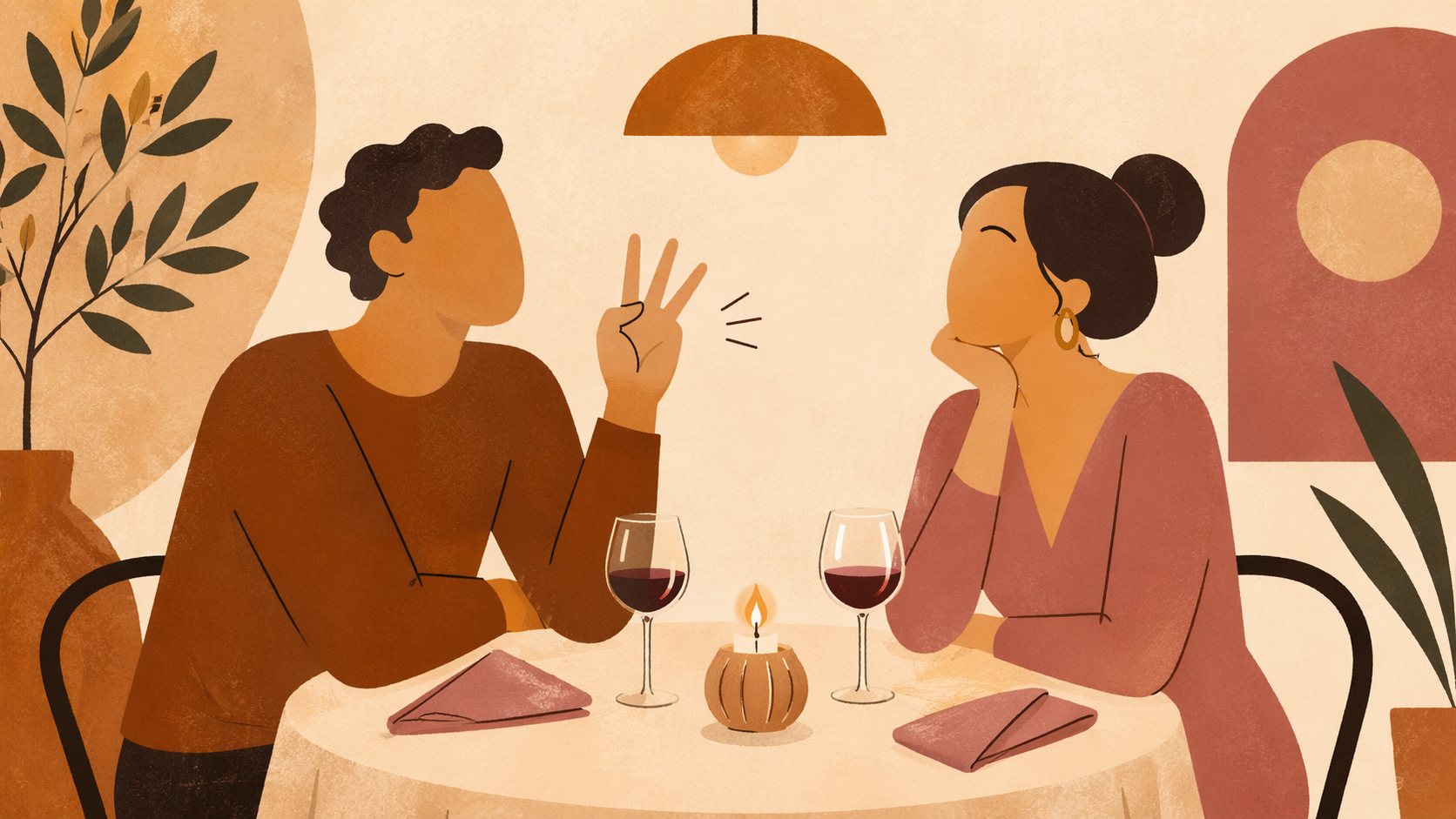
The surprise value of these sets for couples isn't in the lie — it's in which of the truths the other person doesn't know. These are designed to surface something real even in long relationships.
Set 23
- There's a version of how we met that I tell people which is accurate but leaves out the part I find most embarrassing.
- I have a strong opinion about at least one household decision we've made that I've never fully expressed. (lie)
- I've called you by the wrong name once. In my head. I did not say it out loud.
Set 24
- I've recommended something to you — a restaurant, a film, a book — specifically because I thought it would tell me something about how you'd respond to it.
- I once did something you specifically asked me not to do, and it worked, and I've never told you. (lie)
- I have a small habit I formed specifically because of something you said offhandedly. You probably don't remember saying it.
Set 25
- There's a photo of us from early in our relationship that I find unreasonably meaningful and haven't told you about.
- I've had a version of a conversation I was dreading go much better than I expected, and I've thought about that more than makes sense. (lie)
- I have a genuine, considered position on where I'd want to live if we could go anywhere, that I've been holding for about a year and a half without raising it.
Set 26
- I changed a habit after a comment you made — not one you intended as criticism — and I never mentioned it was because of you.
- I've made a major decision partly because of how I thought you'd react, and I was wrong about how you'd react. (lie)
- There's something I've meant to say thank you for, specifically, that I keep intending to mention and keep not mentioning.
→ RandomQ Couples mode — 200+ questions for two, free, no login
Family and Holiday Gathering Sets: Mixed Ages, Maximum Safety
These are calibrated for the widest possible age range — interesting enough that adults engage, accessible enough that younger family members can play.
Set 27
- I can recite a poem from memory that I learned for a school assignment in a grade I'd rather not specify.
- I once drove past my own house three times before finding somewhere to park that I considered acceptable. (lie)
- I have visited the same city so many times that the person at the coffee shop I go to knows what I'll order.
Set 28
- I was once recognized in public by someone I'd never met because of something I'd written or posted.
- I've eaten the same meal for dinner more than twenty days in a row — not by necessity.
- I fell asleep at a movie I had specifically requested we see. (lie)
Set 29
- I've been to a country I didn't know I was visiting until we crossed the border.
- I have a piece of furniture in my home that I built with my own hands and that I'm quietly very proud of.
- I once arrived at a party on the completely wrong day and stayed for an hour before realizing. (lie)
Set 30
- I spent three months learning a skill specifically to win a bet, then discovered the bet had been forgotten by the other person.
- I've read the same book twice in one year, separated by enough months that I'd mostly forgotten it, and the second reading was noticeably different. (lie)
- I have a friend from childhood I've stayed close with despite living in different countries for the past decade.
Remote Team and Video Call Sets: What Works Without Body Language
Remote game sessions run differently — there's no table body language, no immediate group reaction, and the reveal often gets lost in lag. These sets work specifically because the statements are crisp and specific enough to generate discussion in the chat while one person is explaining.
Set 31
- I've been on a video call where I realized partway through that I had accidentally shared my screen from the wrong window.
- I once worked from a café for six months and became friendly enough with the staff that they told me when the Wi-Fi was about to go down.
- I've had a meeting where I was not sure, for the full duration, whether my camera was actually on. (lie)
Set 32
- I have worked in four time zones in three years and I still cannot reliably calculate the difference without using a tool.
- I once completed a full day of calls from a location I had not intended to work from, in clothing that was not planned for video.
- I have a very specific pre-meeting routine that I've developed over the past two years that involves neither coffee nor stretching. (lie)
Set 33
- I've used the same video call background for so long that a colleague once asked me about the room, not knowing it wasn't real.
- I've accidentally stayed on a call for fifteen minutes after the meeting ended because I didn't realize it was still running.
- I once ate an entire meal on a call I thought was audio-only. It was not. (lie)
Set 34
- I once took a work call while standing in a supermarket checkout line and nobody on the call knew.
- I've gone through a full week of remote work where the only person I spoke to live was the person who delivered a package. (lie)
- I keep a notebook next to my laptop where I write things I've actually said on calls that don't fully make sense read back.
College Student Sets: Old Enough for Anything, Specific Enough to Work
Set 35
- I've changed my major twice and the final one was a subject I'd never considered until a conversation at a party.
- I've pulled an all-nighter not for an assignment but because I got into a conversation that I couldn't stop until morning.
- I have strong opinions about which dining hall to use that are entirely unrelated to the quality of the food. (lie)
Set 36
- I took a course because the professor's rating mentioned they "argued with students" — that turned out to be the most useful class I took.
- I once wrote a paper on a topic I had entirely the wrong information about, and the professor commented that my interpretation was "refreshingly heterodox."
- I've lived with someone for a full semester and learned their last name on the last day of the year. (lie)
Set 37
- I've submitted a draft by accident — not the final — and the grade was better than I expected.
- I spent a semester convincing people I was from a different city because I thought it made me more interesting. The city was three hours away. (lie)
- I've had a professor who I emailed asking for an extension and who, while granting it, pointed out that I'd spelled the assignment title wrong in the subject line.
Amy Cuddy's research on how we read and project body language — 54 million views — is directly applicable to what happens during the guessing phase. The slight pause before a statement, the direction of eye contact, the way someone holds their hands: these are the exact nonverbal signals people unconsciously scan when deciding which statement is the lie. Her findings explain why some people are consistently harder to read than others, regardless of how obvious their lies seem.
Andrew Stanton — screenwriter of Toy Story, Finding Nemo, WALL-E — on why specific, concrete detail is the difference between a story that lands and one that doesn't. His central argument: the best stories make audiences work just enough to feel something. That's exactly the principle behind why a good truth in this game needs to be specific rather than vague. "I once got lost" doesn't hold. "I got lost on a trail for eight hours and only found my way out because a stranger was going the same direction" does.
Quick Context Picker
| You're playing with… | Best sections | Sets to start with | What to avoid |
|---|---|---|---|
| Work colleagues (mixed seniority) | Work and team | Sets 7–12 | Anything involving relationships or past employers by name |
| New friend group | Funny, first meeting | Sets 1–6, 13–17 | Late-night topics, relationship history |
| First or early date | First date | Sets 13–17 | Anything about exes, money, or health |
| Long-term couple | Couples | Sets 23–26 | N/A — the more personal the better |
| Family (mixed ages) | Family | Sets 27–30 | Work politics, adult relationships |
| Teenagers (school) | Teen | Sets 18–22 | Adult-specific experiences |
| Remote team | Remote | Sets 31–34 | Long explanations, sets requiring physical action |
| College friends | College | Sets 35–37 | N/A — this group handles everything |
How to Adapt Any Set to Your Own Life
The sets above give you the shape of a calibrated round — but the best two truths and a lie you'll ever play uses your own material. Here's the process for taking any of these sets and making it yours:
The most effective adaptation technique: take the lie from one of the sets above and replace one detail with something from your actual life — a year you remember, a city you've been to, a number that's close to real. Now the lie has your fingerprints on it, which makes it substantially harder for people who know you to dismiss immediately.
For the truths, look for experiences in the same category as the section you're using — something real from that part of your life that sounds roughly as unusual as the lie you've chosen. The goal is three statements where nobody in the room can confidently eliminate any of them without a guess.
FAQ
Can I just use the sets verbatim without adapting them?
Yes, but the game runs differently. Using borrowed statements makes it a test of delivery — who can make a pre-written line sound genuine — rather than a connection exercise. The follow-up conversation after the reveal is shorter because nobody has a story to tell. Use the sets to understand the format, then bring your own material if you want the actual value of the game.
What do I do if my truths are all much stranger than anything I could plausibly lie about?
Pick the two truths that are closest in strangeness to each other, and build the lie to match that level — not the higher one. If your truths are rated 4 and 9, use the 4 as your anchor, write a lie that's a 5 or 6, and save the 9 for the reveal after the game. A mismatched set is usually caused by leading with your strangest truth rather than your most versatile one.
What's the difference between a set for a first meeting versus close friends?
First-meeting sets should involve categories where nobody can verify the claim: childhood, solo travel, unusual experiences. Close-friends sets can go anywhere — and actually work better when they include something your friends think they know, but don't. Long-term groups who think they know everything about each other often produce the best reveals.
How do you handle it when someone refuses to make eye contact during the guess round?
Acknowledge it once: "You're staring at the table, which is information." Then move on. The tell is already in. Coaching people to maintain neutral expressions is theoretically sound and practically useless — almost nobody can actually do it, which is half the fun.
What's the right length for each statement?
One to two sentences. Shorter statements read as underdeveloped and are easier to dismiss. Longer statements often contain the tell in the excess detail — lies tend to over-explain. The sweet spot is specific enough to feel like a real memory, brief enough not to signal effort.
Should statements be written down or improvised?
Written, always. Writing forces commitment to specific wording, which matters because the ambiguity between truths and lies often lives in a phrase rather than a fact. Improvised statements wander — you'll adjust as you speak, which reads as uncertainty, which reads as the lie. Write the statements, read them once, answer questions afterward.
Can the same set be reused with a different group?
Yes — with the same calibration caveat. A set that fooled one group may be too well-known if used again with overlapping social circles. With an entirely new group, a set is effectively fresh. Rotate which statement you designate as the lie if you're using a set more than once.
Explore More
- Two Truths and a Lie — full strategy guide, 200+ individual examples →
- Never have I ever questions →
- Truth or dare questions →
- Icebreaker questions for groups →
- 21 Questions game →
- Most likely to questions →
- RandomQ icebreaker mode — 3,000+ questions, no login →
The sets above are starting points, not destinations. A borrowed set tells you what the format looks like when it's working. Your own version — built from actual events, adjusted for the people in the room — is the one that ends with someone asking a follow-up question at the end of the night, not moving on to the next topic.
That's the whole point. The lie is a mechanism. The truths are what the game is actually for.
→ RandomQ has 7,700+ curated questions across six modes — free, no login required